
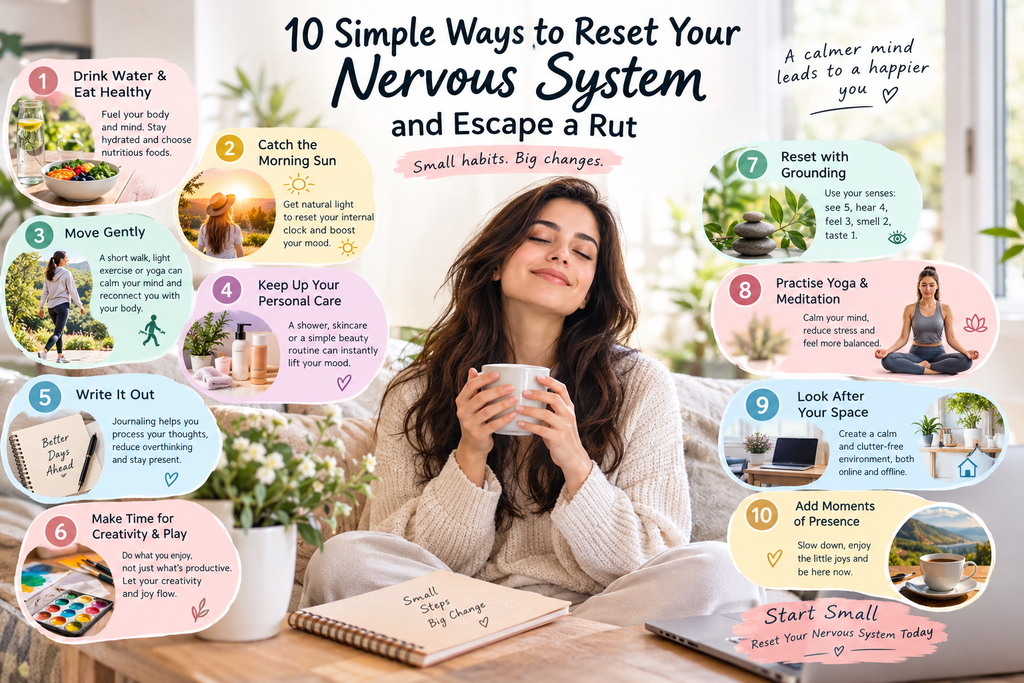
10 Simple Ways to Reset Your Nervous System and Escape a Rut
Some days you just feel flat. You’re tired, your motivation has gone missing, and nothing sounds appealing. Sound familiar? When you feel stuck in a rut, small daily habits can help you manage stress and reset your nervous system. Although these feelings can develop gradually, simple changes to your daily routine may help you feel more grounded and motivated.
Ongoing stress, difficult experiences, and burnout can leave you feeling drained and less able to handle everyday challenges. The good news is that small, manageable habits may help you feel more grounded and improve your daily well-being.
And there’s hope because no drastic changes are needed in your life. Small things matter, and a lot can be achieved with them. The following ten are good starting points to help you restore your nervous system and bring back your sense of self.
Signs Your Nervous System Is Out of Balance
Think about the last few months. Have you felt worn out? Are you constantly feeling stressed every day? Are you feeling demotivated and as if everything that was easy for you previously is now becoming hard? These can be signs that you are experiencing ongoing stress or emotional exhaustion.
It doesn’t just happen overnight. The busy schedule, responsibilities, and the family get added up one by one. Then there’s the emotional side. Life’s tough experiences leave an imprint on you, but most of us don’t give it due consideration.Your nervous system feels all of it anyway.
Highly sensitive people tend to notice this more. They’re also the ones who forget how much they rely on simple daily routines. That’s why doing the basics regularly matters so much.
Why Small Habits Help You Reset Your Nervous System
Small things add up to either make or break your day. Neglect your health and well-being in little ways, ignore certain emotions and sensations, take basic responsibilities lightly, and before you know it, you’re losing yourself. Conversely, just a few simple behaviors can put you right back where you belong.
Life also feels pretty heavy lately. A lot is happening in the world, and change seems constant. That’s all the more reason to look after yourself in small ways. You cannot change everything at once, so start with the habits that best suit your current needs and lifestyle. Health, purpose, and relationships are good starting points..
1. Drinking Water and Healthy Eating
Start with what goes into your body. A big glass of water first thing in the morning is an easy win. Then make sure you’re eating enough throughout the day. Don’t forget what you feed your mind either. Endless scrolling is a kind of consuming too, so notice what you’re taking in online.
2. Catch the Morning Sun
Morning light helps regulate your body’s internal clock, which supports a healthy sleep-wake cycle. Step out into the sun after you have been awake for some time. Getting some sun among plants is an added advantage.
3. Move Gently
Gentle movement, such as walking or stretching, can help reduce stress and improve your mood. All it takes is just about 10 to 15 minutes. The walk is pretty much unbeatable, particularly if done in nature. If you are mindful of the environment surrounding you, then you will have peace of mind. A gentle walk is a simple way to relax, manage daily stress, and reset your nervous system naturally.
Take notice of the environment around you during this activity. There is nothing wrong with listening to your podcast or thinking about your thoughts; but you become oblivious to the chirping of birds and the breeze in your hair. Walking provides bilateral stimulation as well, which is the left-to-right pattern that assists in calming the nervous system.
Not a walker? It could be a good choice for you too. You get the feeling of being more connected to your body and have an opportunity to work on your emotional burdens.
4. Keep Up Your Personal Care
A shower, your skin care, a simple beauty routine: these are the first things to slide when you’re feeling low. Yet getting ready can change your mood more than you’d expect. Maybe it’s a bit of makeup or a hairstyle you like.
It isn’t about vanity. It is about making time for yourself because your well-being matters. It can be termed self-care or self-love. It’s both.
5. Write It Out
There is another method of resetting your nervous system through journaling. When you write out your thoughts, it enables you to understand them better. The result of overthinking is storytelling, while journaling helps delay this process.
It keeps you in the present as well because there is no way that you can do twelve other things while you are writing. This is being mindful.
Not sure where to start? Try some prompts like:
- What do I value at the present time?
- What could reconnect me with myself?
Even tiny steps count, so don’t brush them off.
6. Make Time for Creativity and Play
Play and creativity help you feel safe, and they bring wonder back. Trouble starts when a hobby turns into a goal. Pressure has a sneaky way of draining the fun.
That’s where atelic activities come in. They’re things you do simply because you enjoy them, with no outcome and no need to be productive. Telic activities are the opposite, since they aim for a result. Both have their place, but it’s worth having a few hobbies that belong only to you. You can also look for a middle ground, where you enjoy the process and share the result later.
Resistance can pop up too. Sometimes, procrastination can be linked to stress, fear of failure, or feeling overwhelmed. If you keep avoiding a task you genuinely want to complete, try breaking it into smaller steps and starting with just five minutes.
If you keep avoiding something you actually want to do, your nervous system may be trying to protect you, perhaps from a fear of judgment or failure.
Here’s a simple way around it: set a timer and just begin. It doesn’t have to be perfect, polished, or even lead anywhere. You’re only getting moving and stepping past the fear.
7. Reset Your Nervous System Through Grounding
It only takes a couple of minutes to see how each sense is functioning. First, take a look around, and identify five things that you see. Then, use your ears to identify four things that you hear. Try the 5-4-3-2-1 grounding technique. Identify five things you can see, four things you can feel, three things you can hear, two things you can smell, and one thing you can taste. This exercise can help bring your attention back to the present moment when you feel stressed or overwhelmed.
8. Practise Yoga and Meditation
Yoga and meditation combine gentle movement with focused attention and breathing. Regular practice may help some people manage stress, relax their bodies, and improve their overall well-being. For more practical guidance, the National Institute of Mental Health’s tips for caring for your mental health offer additional ways to support your emotional well-being. Start with a few minutes and increase the duration as you become comfortable.
One minute is plenty. Try five later on and build up slowly. There are lots of free guided meditations online, including short ones made for beginners.
9. Look After Your Space
Be mindful of the environment in which you find yourself: this could be the physical surroundings you live in, the mind you think with, or even your virtual world. By minimizing distractions, putting healthy boundaries in place, and creating an environment that will help you relax and concentrate, you are creating a space where you can have a more positive experience.
10. Add Moments of Presence
Let yourself have a few minor luxuries during the day. Take some time out for yourself and enjoy your favorite beverage of tea or coffee. Have fun wandering around in nature. Skip the podcast once in a while and just unplug. Working through your feelings is helpful at times, but it’s also nice to simply be where you are.
Small moments matter more than they seem. Notice the little joys. When joy and wonder fade, you can feel cut off from yourself. Presence doesn’t ignore the heavy parts of life, and it doesn’t bypass them either. It just brings you back to what’s here. Start with a mindful cup of coffee. Sit, sip, and stay with it. Taking mindful breaks throughout the day may help you reset your nervous system and feel more connected to the present moment.
Start Small and Feel Better
Getting out of a rut doesn’t happen overnight, and you don’t need to change everything at once. Start with one or two habits that feel manageable, such as taking a short walk, spending time outdoors, or writing down your thoughts. Small steps can make self-care easier to maintain over time. Be patient with yourself, focus on what feels helpful, and remember that progress matters more than perfection.